


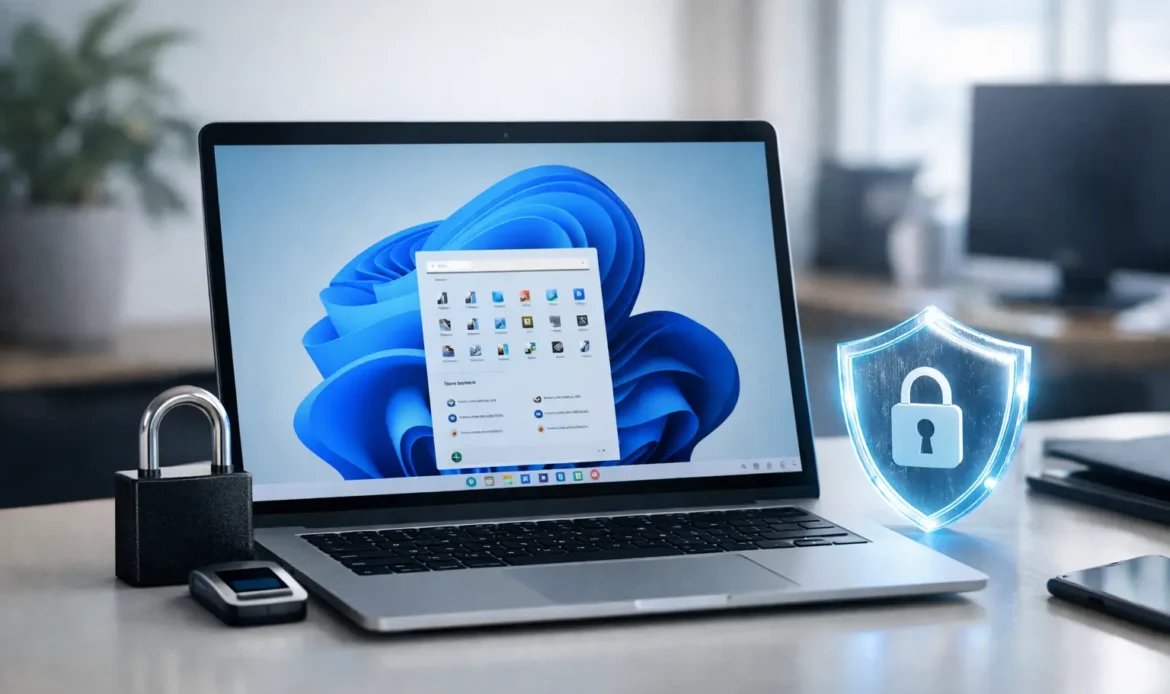
A new Windows 11 computer can look secure straight out of the box, yet one rushed setup, reused password or ignored update can leave an opening. The good news is that Windows 11 security features give home users and small businesses a strong starting point without needing to become IT experts. The key is knowing which protections are working, which need attention, and where a little care makes the biggest difference.
This is not about making your computer difficult to use. It is about reducing the common risks we see every day: scam emails, fake login pages, unwanted software, lost laptops, weak Wi-Fi settings and files that have not been backed up.
The Windows 11 security features that matter most
Windows 11 brings several protections together under the Windows Security app. You can find it by searching for “Windows Security” from the Start menu. Its main screen gives a useful overview of virus protection, firewall status, account security and device health. A green tick is reassuring, but it is still worth opening each area occasionally rather than assuming everything is sorted.
Microsoft Defender antivirus protection
Microsoft Defender Antivirus is built into Windows 11 and provides real-time protection against known malware, suspicious downloads and many common threats. For most home computers, it is a sensible baseline and is generally less intrusive than the old antivirus programs that filled the screen with pop-ups.
Check that real-time protection and cloud-delivered protection are switched on. Real-time protection checks files as they are opened or downloaded, while cloud protection helps Defender respond more quickly to newer threats. You can also run a quick scan if something feels off, such as a suddenly slow computer, unfamiliar browser tabs or warnings asking you to call a support number.
Defender is helpful, but it cannot fully protect someone who is persuaded to hand over a password or approve a fake payment. If an email claims to be from your bank, a delivery company or a government service, avoid using its links. Open your browser and visit the organisation through its usual address instead.
Firewall and network protection
The Windows firewall controls which connections are allowed in and out of your computer. In normal circumstances, it should be left on. Turning it off to get an old program or printer working may solve one problem temporarily while creating another.
Windows also asks whether a new Wi-Fi network is public or private. This choice matters. A home or trusted small-office network can be set to private so approved devices, such as a printer, can communicate more easily. A café, hotel or other shared connection should be public, which makes your computer less visible to other people on that network.
If you are using a home network, do not overlook the modem or router. Change its default administrator password, use a strong Wi-Fi password, and choose WPA2 or WPA3 security if available. Windows can protect the PC, but it cannot compensate for a network that anyone nearby can join.
SmartScreen and safer browsing
Microsoft Defender SmartScreen helps warn you about suspicious websites, downloads and apps. It is particularly useful when a convincing-looking page asks for account details or a downloaded file has a poor reputation.
The warnings can occasionally feel inconvenient, especially when installing a specialist program from a smaller supplier. That does not automatically mean the program is unsafe. It does mean you should stop and verify where it came from before overriding the warning. Download software from the developer’s official site, not from an advert, random search result or pop-up claiming your computer has a problem.
Be especially cautious of browser notifications. A website does not need to scan your computer to tell you that you have a virus. Messages saying “your PC is infected” or “call immediately” are commonly designed to create panic. Close the browser tab, do not call the number, and run a scan if you are unsure.
Account security is as important as antivirus
Many computer problems now start with an online account rather than an infected file. Email accounts are a common target because they can be used to reset passwords for other services. Protecting the account you use to sign in to Windows is therefore a practical priority.
Use a unique, strong password for your main email and Microsoft account. A long passphrase made from several unrelated words is easier to remember than a short, complicated password and harder to guess. Avoid using the same password across email, shopping, banking and social accounts. If one site is breached, reused passwords can give criminals access elsewhere.
Two-step verification adds another layer. After entering your password, you confirm that it is really you through an authenticator app, code or other approved method. It adds a small step at sign-in, but it can prevent a stolen password from being enough on its own.
Windows Hello is also worth setting up on compatible computers. It lets you sign in with a PIN, fingerprint or face recognition. A Windows Hello PIN is linked to that particular device, rather than functioning like a standard online password. Keep your usual account recovery details current as well, particularly if you change your mobile number or email address.
Updates close gaps you cannot see
It is tempting to postpone Windows updates when you are busy, particularly when a restart is required. However, many updates include fixes for security weaknesses that criminals may try to exploit. Leaving a computer months behind is like leaving a known fault unfixed because it has not caused trouble yet.
Set active hours so Windows is less likely to restart while you are working, then allow updates to install at a convenient time. This applies to browsers, office software, PDF readers and other regularly used programs too. Updating only Windows while leaving older applications untouched still leaves potential weak points.
For a small business, avoid having every important computer update at exactly the same time without a plan. It can be sensible to update one non-critical machine first where specialised software is involved, then proceed once everything has been checked. Security matters, but so does keeping the business running.
Device encryption helps if a laptop goes missing
If a laptop is lost, stolen or left in a vehicle, its stored files may be at risk even if the Windows sign-in screen has a password. Device encryption, available on many Windows 11 PCs, protects data on the drive so it is much harder to access without the correct sign-in details or recovery key.
Look in Settings under Privacy and security to see whether device encryption is available and enabled. Some computers use BitLocker instead, usually on certain editions of Windows 11. Before making changes, make sure the recovery key is stored somewhere safe that is not only on the computer itself. A password manager, secure printed record or another trusted recovery method can be appropriate.
Encryption is valuable for laptops containing work documents, customer information, family photos or saved financial records. On a desktop that never leaves a secure home office, the risk is different, but it can still be worthwhile.
Backups are the security feature people forget
A backup is not a replacement for antivirus, but it is one of the best defences against ransomware, hardware failure and accidental deletion. If the only copy of your family photos or business documents is on one computer, the real problem is not whether the computer fails. It is when.
Keep copies of important files somewhere separate from the PC. That may mean an external drive that is disconnected after backup, a reputable cloud storage service, or both. For important small-business data, use a planned routine and test that files can actually be restored. A backup that has never been checked can provide false confidence.
Windows 11 also includes ransomware protection options, including Controlled Folder Access. This can stop untrusted apps from changing files in selected folders. It is a useful extra safeguard, though it may occasionally block a legitimate older program until it is allowed. That trade-off is usually manageable when you know why the alert has appeared.
A few habits make every setting work better
The most effective protection is a combination of Windows settings and sensible everyday habits. Keep an eye out for unexpected attachments, do not let unknown callers take remote control of your computer, and be wary of urgent requests for gift cards, bank transfers or account codes. Legitimate organisations do not normally demand immediate payment through a pop-up message.
Use a standard account for day-to-day work where practical, rather than an administrator account that can approve major changes without a prompt. For shared family computers or small offices, give each person their own account rather than sharing one password. It makes access easier to manage and helps protect personal files.
If Windows Security shows repeated warnings, your computer has been behaving strangely, or you are not sure which setting is safe to change, getting it checked early is usually quicker than dealing with a full malware cleanup later. For Southern Adelaide households and small businesses, Southern Computer Services SA can help assess security settings, remove threats and set up practical backup and network protection without the jargon.
A secure computer does not need constant fussing. Keep it updated, protect the accounts connected to it, back up the files you would hate to lose, and pause before trusting an unexpected message. Those small routines do more for your peace of mind than any single security setting.